Study Environment
Goethe Universität and the Institute for Theater, Film and Media Studies
The Master’s program benefits from the broader resources of Goethe University. Frankfurt has a long tradition of critical academic engagement with cinema, stretching from the critical theory of the Frankfurt School and the establishment of the first film studies program in Germany in the early 1970s to the founding of the Department of Theater, Film and Media Studies – or TFM for short – in the early 1990s. With an international orientation, Frankfurt’s university library has systematically collected film-related literature since the 1950s, and its collection in this area is of significance throughout Europe. Students have access to the university’s infrastructure and can participate in colloquia, conferences, international collaborations, guest lectures, and much more. They also have unrestricted access to the classes and events offered by the TFM.
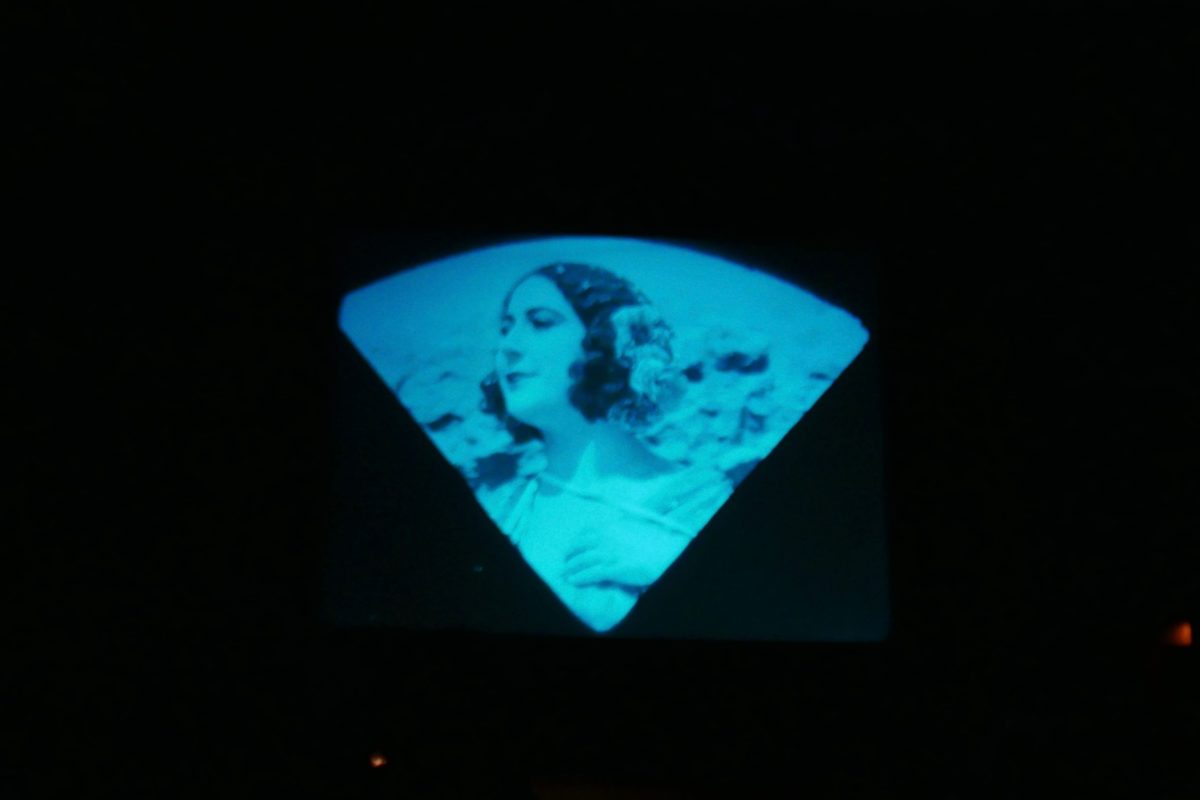
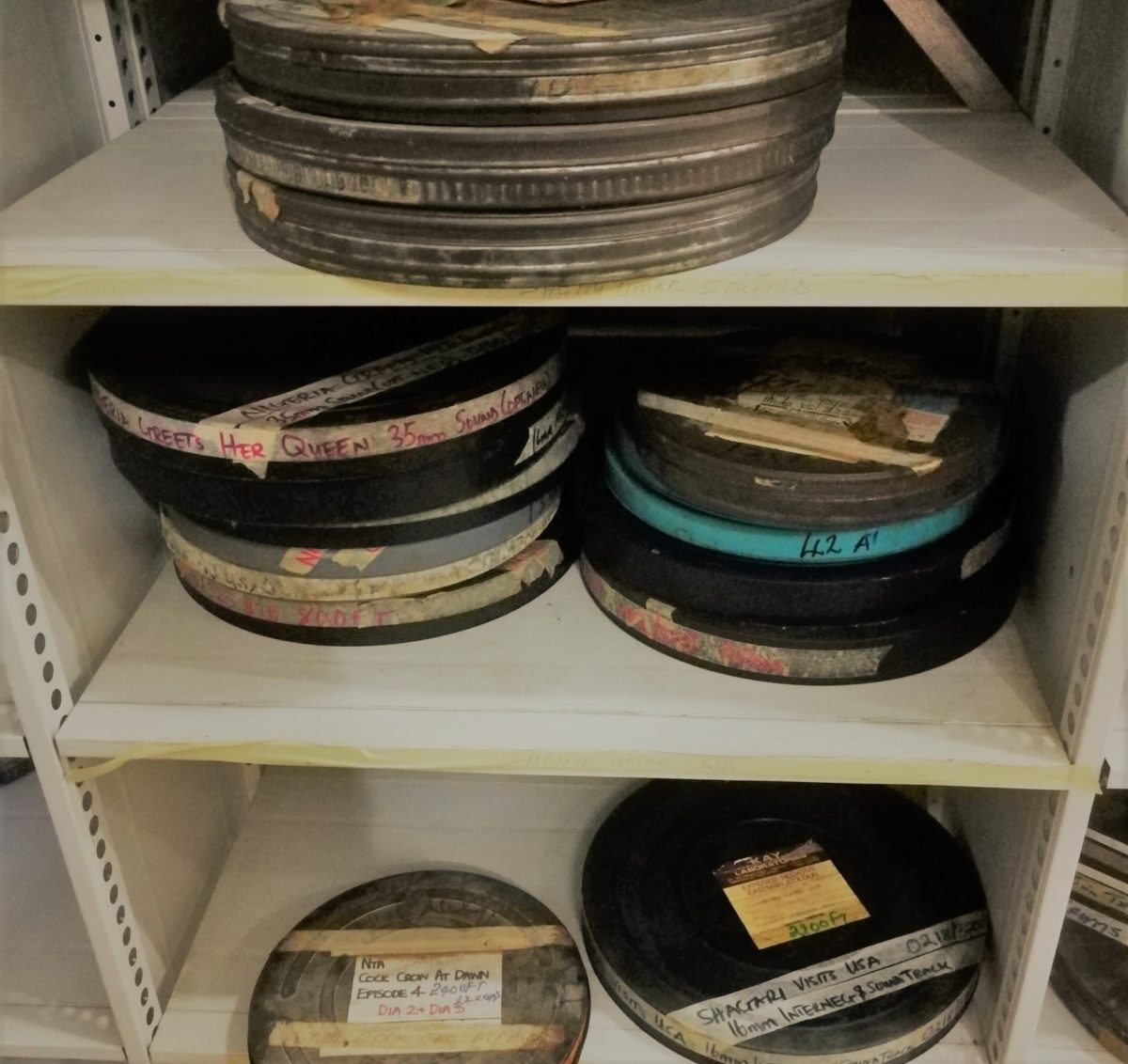
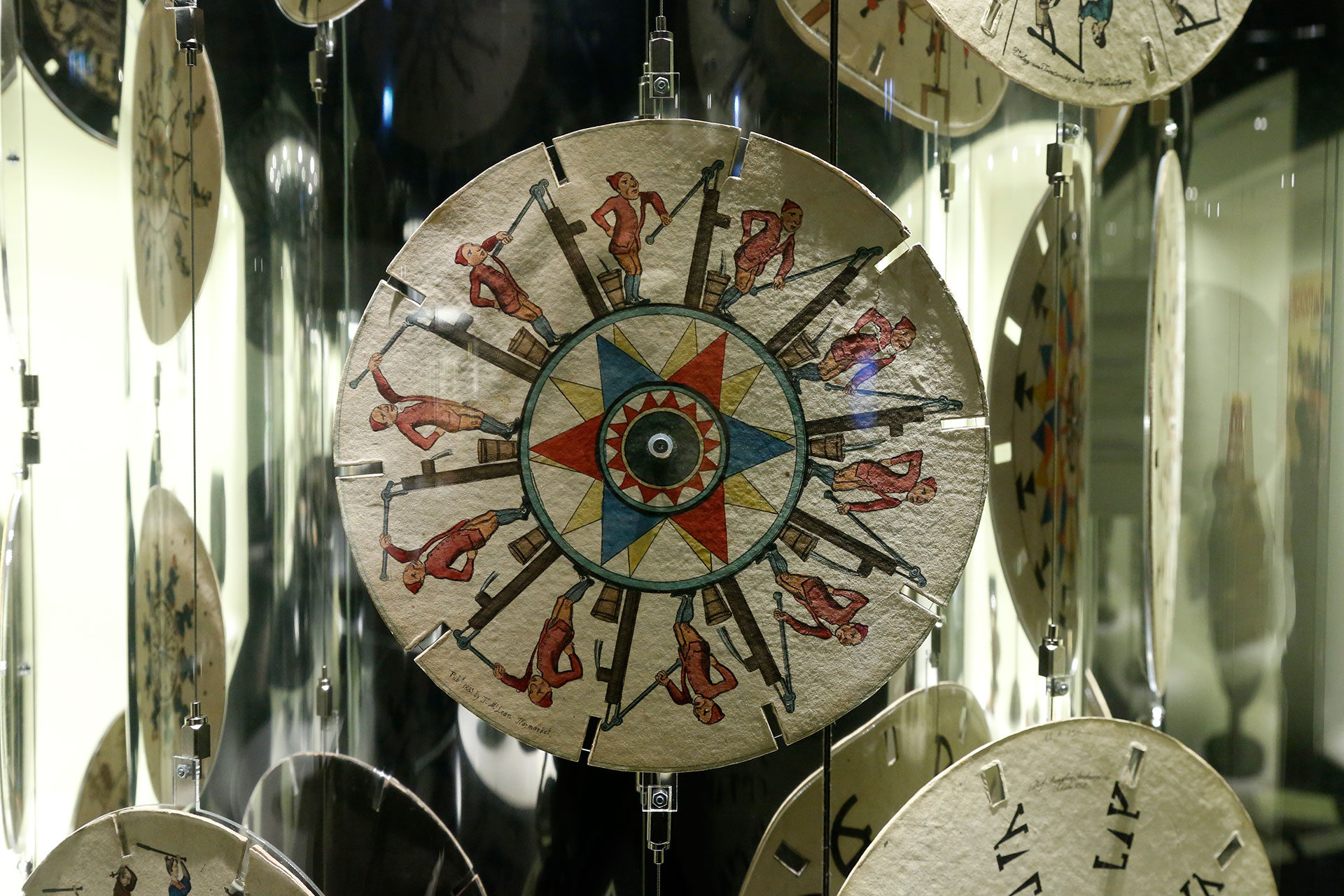
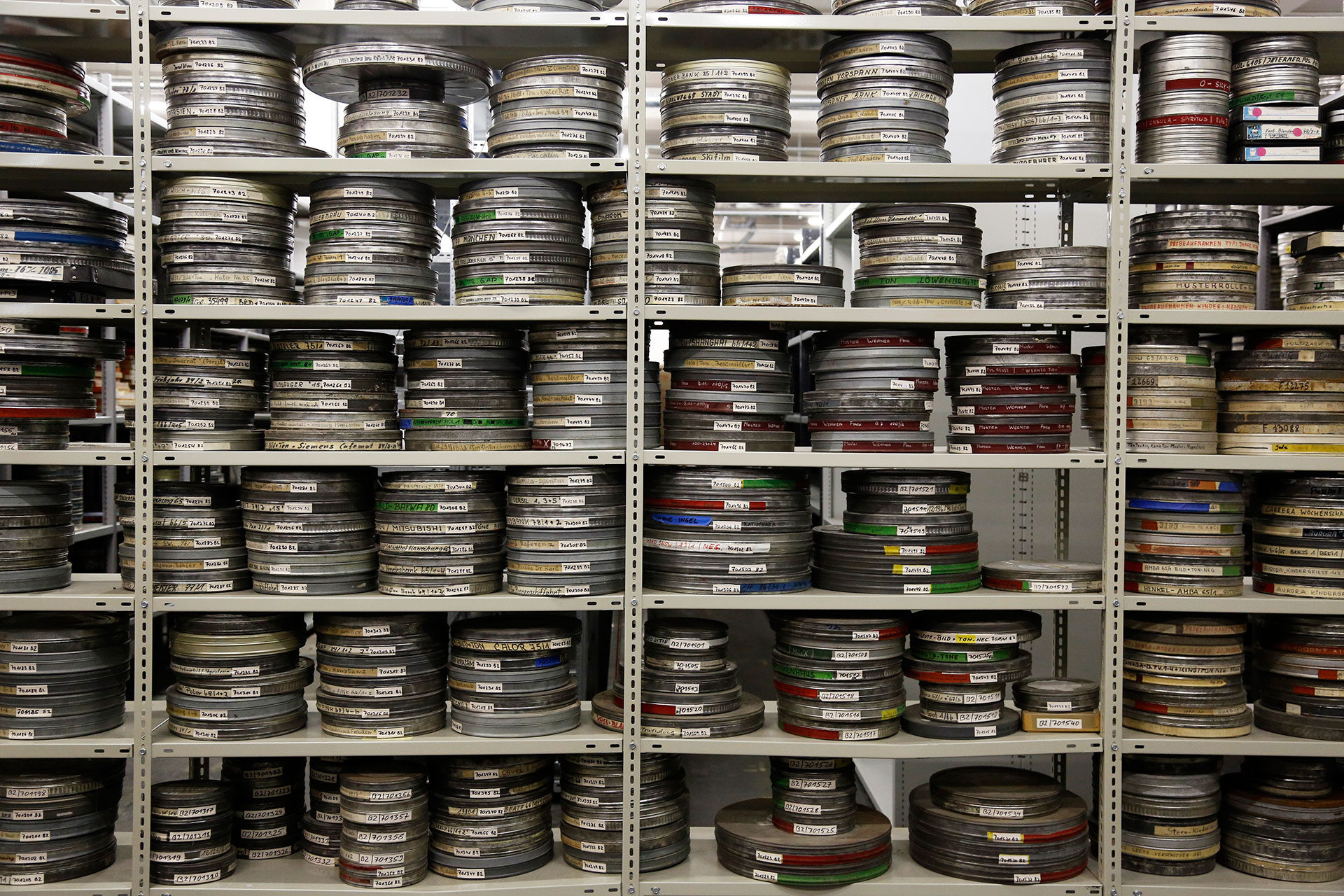
The TFM has its own 16mm film archive. The celluloid film collection has been successively built up since the foundation of the department in 1991. A set of early cinema films (1895–ca. 1918) forms the cornerstone of the collection and consists almost entirely of unique 16mm prints made from restored 35mm color negatives owned by the EYE Film Museum in the Netherlands. The collection also includes experimental films and auteurist classics, as well as pedagogical and scientific films. Although the TFM maintains an extensive media library (Mediathek), this collection of roughly 350 films emphasizes the continued relevance of analog film materials. It also represents a precious resource for research and teaching, as well as a directly accessible site for students to undertake independent, practical archival work.
For the Master’s in Film Culture, relevant teaching partnerships have also been established. In addition to the courses offered at the TFM, the program closely cooperates with the Department of Law, the Department of Economics, and the Master’s program in Curatorial Studies offered by the Department of Art History. Drawing on the perspectives of these disciplines, students are thus able to familiarize themselves with fundamental questions concerning copyright, authors’ rights, and film marketing, as well as with the configurations and practices of museums and exhibition sites.
DFF – Deutsches Filminstitut & Filmmuseum
The DFF – Deutsches Filminstitut & Filmmuseum is among the most significant film archive facilities in Europe. With its own cinémathèque (the Deutsches Filmmuseum), a film archive and distribution center, a library and text archive, collections, festivals, online platforms, film education projects and publications, it actively contributes to the transmission of living film culture, on a national and international level. It is consistently engaged in contemporary debates in the field, and offers students a lively, ambitious environment for their studies in film culture, which goes well beyond their regular participation in seminars.
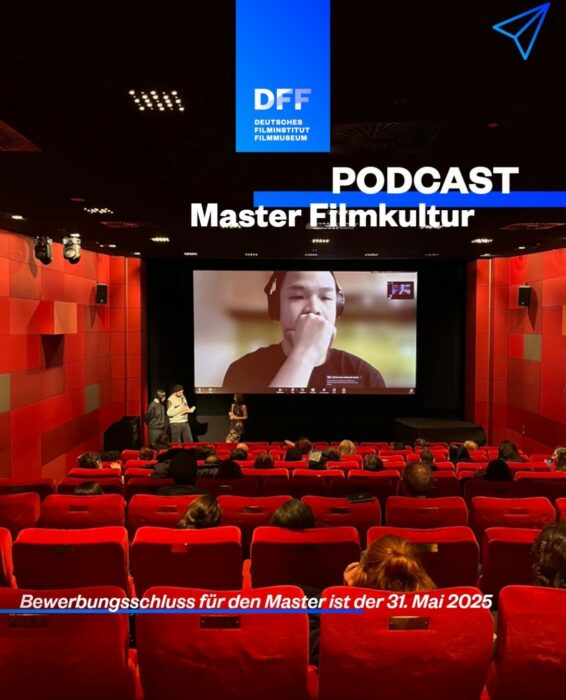
The Cinema within the DFF is a unique educational and experiential space, to which Masters students have free access during the first two semesters of their study. It offers an international program of screenings, with retrospectives, thematic series and national panoramas, oriented both to the history of the cinema and to contemporary film art. Films are usually shown in their original language and in their original format, which means that analogue film (in 16mm, 35mm and 70mm) can be experienced in its initial mode of reception. Prominent filmmakers such as Jonas Mekas, Michael Haneke, Margarethe von Trotta, Liv Ullmann and many other are regularly invited to attend debates and discussions with the public. One of the most important programs is the Lecture & Film series organized conjointly with the Goethe Universität, which, over the course of the academic year, highlights film artists and tendencies in film history. Treppe 41, a student-initiated film club, also allows students to develop their own experiences in film programming.
Mandatory Phase
During the first year of the program, students acquire a comprehensive grounding in the field of film studies by completing four modules covering film history, theory, and aesthetics; archival practice and politics; legal/economic questions; and the institutional history of museums and film festivals. The introductory module serves to deepen the students’ core competencies in film studies, while the advanced modules combine the study of cinema with additional qualifications in the fields of archive studies, museum studies, intellectual property law, film economics and marketing, and the practices and institutions of film culture. Alongside the seminar format that is the norm at TFM, supplemented on occasion by lectures, the Master’s in Film Culture offers several special features, which are described below.
Film Culture Seminars at the Institute for TFM
Students in the Master’s program take subject-specific seminars at the Department of Theater, Film and Media Studies (TFM). With an emphasis on film history and media theory, these courses offer a wide range of opportunities for critical engagement with the cultural, aesthetic, political, and economic significance of film. They also inform approaches to film archiving, restoration, and curation, as well as the programming and presentation of film culture in the public sphere.
Prof. Dr. Laliv Melamed, Professor for Digital Film Cultures since 2024, offers regular seminars including “Introduction to Documentary” (winter semester) and “Film Cultures in a Changing Media Landscape” (summer semester). “Introduction to Documentary” provides a wide survey of the histories, forms, theories and practices of documentary film. The seminar is organized around social movements, aesthetic trends, ethical debates, technological developments, and institutional frameworks that define and redefine documentary over time. “Film Cultures in a Changing Media Landscape” asks how to think of film and cinema as plural, heterogenous forms beyond the traditional focus on texts, movements, and auteurs. The seminar is divided into four sections – discourse/institutions, distribution, production, and exhibition – each understood as a scene in which cinema and its culture are redefined. Moving from center to margin, the course considers different screens, spaces, audiences, and uses of cinema, combining theoretical analysis with external activities, including excursions to a film festival, an exhibition, and a symposium, as well as a filmmaker talk. Furthermore, Prof. Melamed offers thematic seminars connected to her research and curatorial practice. For example, the seminar “From Writing History to Punk: Working with ‘Found Footage’” (winter 2024) examined the compilation of existing materials as a form of archival labor, resistant practice, and historiographical tool. It discussed practices such as reuse, remix, and reappropriation as commentaries on the materiality, politics, and media history of film – spanning from the historical avant-garde and the punk video era to digital acts of piracy.
In addition, the seminar catalog at the department has recently included seminars on feminist film cultures (Dr. Clara Podlesnigg), the relationship between cinema history and urban history (Dr. Andrea Haller), as well as a curatorial seminar connected to the exhibition Fixing Futures at Goethe University’s Museum Giersch (Bettina Schulte Strathaus).
The seminar “Re: Feministische Filmkulturen” (winter 2025) explored core principles driving feminist media practices – such as remaking, reenacting, and resisting – across forms ranging from adaptation to video art, film festivals, and activist social media. Drawing on feminist theory, the seminar examined case studies centered on these diverse media practices. Students also attended Remake. Frankfurter Frauen* Film Tage, participated in guest lectures focusing on feminist protest cultures in the archive and contemporary artistic practice, and organized a one-day symposium to conclude the seminar.
The seminar “Cinema History as Urban History: Topographical Perspectives on an Invisible Culture” (winter 2024) explored movie theaters as cultural sites, focusing on the media, architectural, and urban dimensions of Frankfurt’s Bahnhofsviertel. Investigating the social and cultural lives of city dwellers since the early 20th century, the seminar asked who visited the cinema and why. The course examined how social and technological transformations reshaped cinema culture and explored ways of curating this fragmented urban history today. Through site visits, expert talks, and independent archival research, students engaged with methods of public history to design a public-facing guided city tour, which was ultimately published via the Frankfurt History App.
The seminar “‘Fixing Futures’: Curating a Film Series for the Museum Giersch Exhibition” (winter 2024) invited students to curate and present a film program accompanying the exhibition FIXING FUTURES: Planetary Futures Between Speculation and Control at Museum Giersch. In light of global climate crises and the political urge to render futures predictable, the seminar analyzed the tension between radical uncertainty and the ambition for control. Bringing together the visions of international scientists, activists, authors, and artists, the project placed cinema in dialogue with research and urban society. As a collective, interdisciplinary project, the seminar brought together students from diverse academic backgrounds, who collaborated with the Museum Giersch and the DFF cinema to transform theoretical analyses into a film program.

Workshops
Workshops are intensive events featuring German and international guests with professional experience in areas relevant to the degree. They introduce students to different fields of professional practice and typically last between one and five days. Workshops serve as a point of departure for deeper individual research (Selbststudium), which may also take the form of a written paper.
Blockseminars and Workshops
An integral part of the program is the opportunity to participate in practical workshops that allow students to gain hands-on experience in curating film programs for public presentation. One example of this is the project “Reassembling Archival Assemblies: Arsenal on Location,” realized in cooperation with the Arsenal Filminstitute in Berlin (summer 2024). For this project, students curated film programs situated within Frankfurt’s urban space, absorbing and amplifying the impulses of the Archival Assembly festival, which investigates the artistic, social, and political resonance of archival practices.
Another example is the practical workshop “Fürsorge, Kritik, Kino” (summer 2026), which was built on the seminar “Re: Feministische Filmkulturen” (winter 2025). Working together with curator and Film Culture alumna Elena Baumeister, students were introduced to historical and contemporary examples of feminist approaches to film curation and programming. Based on this input, students designed, organized and facilitated two events: a public film screening at the university cinema Pupille and a temporary film installation presented on campus.
Studio Discussions (Werkstattgespräche)
Encountering concrete sites and institutions of film culture, exchanging ideas with key figures active in the field, deepening their understanding of film-cultural processes and working methods, and laying the foundations for their own professional networks: these are the primary goals of the Studio Discussions (Werkstattgespräche).
Guests include staff of international cinémathèques and festivals; curators from cinemas and contemporary art institutions; copyright experts; key players from film economics and distribution; as well as scholars, critics, activists and other practitioners from across the spectrum of film culture who shape, stimulate, and develop the field. Through these events, which are open to students of all semesters of the Film Culture program, a dynamic map of film-cultural labor is continually taking shape.
In addition, Goethe University and the DFF make use of unique opportunities, such as guest residencies or external excursions, to organize spontaneous Studio Discussions for the benefit of the students.
Excursions
Lecturers at Goethe University offer regular excursions as part of the mandatory phase of the degree. These include an annual opportunity for first-semester students to receive accreditation for attending the Berlinale. The excursion forms part of Prof. Melamed’s regular block seminar, which asks, “What, where and to whom is a film festival?” Students independently explore the festival, complemented by preparatory reading sessions, a group tour of the Forum Expanded exhibition spaces, conversations with different actors in the festival ecology – including curators and interns – and a roundtable with experts.
Beyond this, numerous smaller excursions take place within and outside the context of the ongoing teaching program offered at the TFM. These include visits to the goEast Festival in Wiesbaden, the European Media Arts Festival in Osnabrück, the Remake Festival organized by Kinothek Asta Nielsen in Frankfurt, and Arsenal’s Archival Assembly in Berlin, as well as trips to various cinemas and special screenings, exhibitions, film concerts, conferences, and places whose relationship to film and media may not initially be apparent, such as the Frankfurt Stock Exchange or an industrial site. A historic cinema tour of Frankfurt takes place every winter semester to welcome new students.
Excursions may also be organized independently by students. These have previously included trips to Il Cinema Ritrovato, a festival of restored films organized by the Cineteca di Bologna since 1986, and the congress of the International Federation of Film Archives (FIAF).
Independent Study
In the framework of “independent study”, students have access to additional areas of research, on the basis of discussions with faculty and a reading list developed with the instructor in question. The function of this “Independent Study” essentially consists in building bridges between the content of the research- and practice-oriented components of the degree, and extending fields of knowledge which were first explored in seminars and lectures. This particular form of work is relevant to both the mandatory phase and the profiling phase of the degree. Independent study is particularly useful for a more in-depth evaluation of experiences gained during the internship, and can also be extended in a Masters thesis grappling with the current state of research.
Profiling Phase
Practical Semester
Hands on! In the third semester of the Masters in Film Culture, students will apply the knowledge they have gained of academic methods and ways of working in film culture to the practical sphere, and complete a 3- to 6-month internship in a relevant film culture institution. The goal of this practical semester is the development of a specific archival and/or curatorial project, which is documented in the form of a comprehensive work report, and which forms part of the student’s portfolio. This project can then form the basis of a Masters thesis in the fourth semester.
The selection of a suitable institution for the practical semester is made through a close coordination between the student, the Goethe-Universität and the DFF. The DFF itself makes numerous positions available in its departments, archives and projects, but also expressly encourages students to take the opportunity of an intensive insight into other film culture institutions. The degree has access to a broad network of national and international film culture institutions, festivals, cinemas, and other organisations, which periodically offer positions for the 3- to 6-month internship, including the Friedrich-Wilhelm-Murnau-Stiftung in Wiesbaden, the Arsenal – Institut für Film- und Videokunst in Berlin, and ZDF/Arte in Mainz and Strasbourg. A list of all prior hosting institutions can be found on the NETWORK page. The Goethe-Universität and the DFF may also agree to individual proposals, and to this end seek wherever possible to make use of their existing contacts.
Graduating Module
The graduating module consists of the Masters Thesis and an accompanying colloquium, which provides an opportunity for the presentation and discussion of specific questions relating to content and method, as well as an oral exam on two topics developed within the framework of the graduating module. The profiling phase thus serves either as a qualification for specific professional fields, or as preparation for doctoral study.
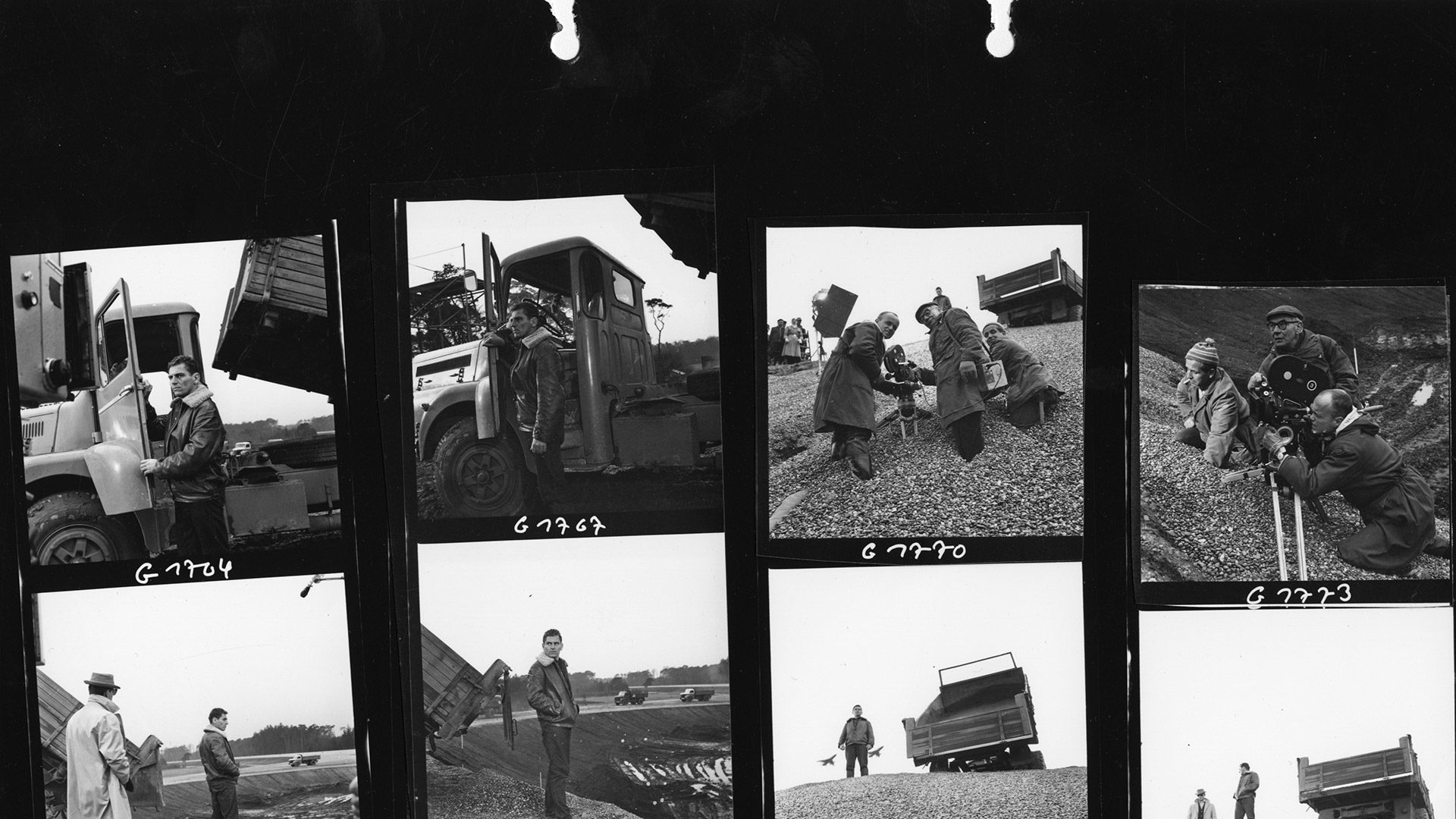
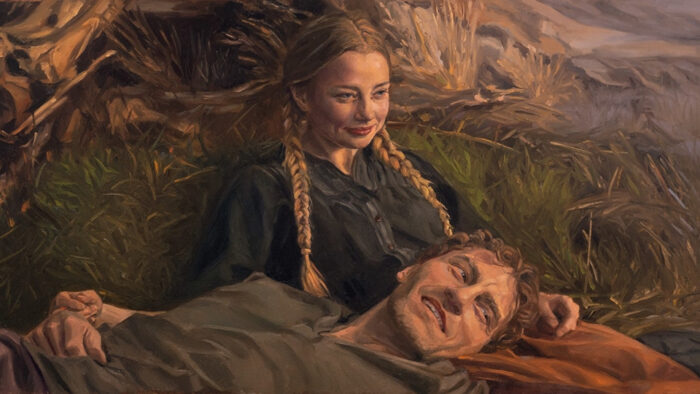 Filmreihe “Unsicheres Terrain? Blicke in verschwindende Landschaften” von November 2025 bis Februar 2026 im Kino des DFF. Kuratiert von Johanna Fieberling, Studentin im Master Filmkultur.